
Spiced & Oriental Home Fragrance: Heat, Depth, Character
What Oriental Fragrance Actually Means
Oriental fragrance is the most misunderstood category in home fragrance. At its most specific, it describes a tradition running from the attars of South Asia through the bakhoor and oud of the Arabian Peninsula to the amber and incense compositions of Persia and the Ottoman world: a tradition built around warmth, depth, longevity and ceremony. Oriental fragrances are built around resins, amber, woods, and spices: oud, benzoin, frankincense, labdanum and musk, combined with cardamom, clove, cinnamon and saffron. The effect is rich, sensual, and distinctly unhurried.
These are not scents for people who want their home to smell clean. They are for people who want it to feel extraordinary.
The word oriental has been debated in fragrance in recent years. What it describes remains useful: a family of compositions rooted in the warm, resinous, spice-led tradition of South Asian and Middle Eastern perfumery, distinct from floral, fresh or woody categories. At LK Verdant, we use the term to describe that tradition: compositions with depth, ceremony and a genuine material connection to the cultures that pioneered them.
The Notes That Define an Oriental Composition
Tonka bean smells of coumarin: sweet, biscuity, slightly almond-like, and makes an oriental composition feel warm and addictive without sweetness becoming cloying. Myrrh brings a medicinal, slightly camphoric edge that grounds and adds complexity. Amber (labdanum-based) provides the balsamic base that holds everything together. Oud brings smoke and resinous depth. Cardamom is fresh and aromatic with a slight citrus quality that lifts heavy compositions. Cinnamon brings warm sweet spice, particularly effective in winter. Saffron is warm, slightly leathery, and extraordinarily complex at low concentrations. Frankincense is resinous and slightly sweet: one of the oldest home fragrance materials in existence, used continuously for over four thousand years.
Spice prevents an oriental composition from becoming purely oppressive. It adds an alerting edge that lifts the darkness without removing it.
Oriental Fragrance as an Alcohol-Free Perfume Oil
Oriental and spiced compositions are among the best-suited to alcohol-free perfume oil formats. The deep base notes, oud, amber, frankincense, myrrh, are long-lasting and stable materials that sustain continuous release in a reed diffuser or oil burner without fading. An oud and amber alcohol-free perfume oil in a reed diffuser provides hours of sustained presence that a spray format, however high quality, cannot match. For a home fragrance tradition built around ceremony and longevity, the slow release format is the most appropriate one.
Where Spiced Orientals Work
The hallway is the primary room for oriental home fragrance. A bold oriental in a reed diffuser at the entrance creates the luxury hotel lobby effect more effectively than any other fragrance family. The warmth and projection of oud and amber suit the transitional character of most hallways. It sets an intention for the rest of the home.
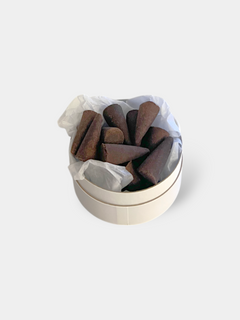
The living room in autumn and winter is the second major application. Arabian Tonka Oud cones burned before guests arrive is one of the most effective atmospheric gestures available in the home. The residual fragrance holds for hours and will be noticed and remarked upon.
In a bedroom, oriental scents create intimacy and sensuality. A frankincense and amber blend, or saffron and oud, pushes a bedroom towards something closer to a riad or high-end hotel suite than a domestic room.
In a meditation or prayer space, oriental incense is the natural choice. Frankincense, oud and myrrh have been burned in contemplative settings for millennia across multiple religious traditions. The smoke, the warmth, the slow release. None of this is accidental. These materials were chosen for this purpose.
Oriental fragrance is not for mornings, kitchens, or spaces designed for cognitive output.
Which Formats Work Best
Incense cones are the most authentic and most powerful format for oriental fragrance. Burning resin is how these compositions have been delivered for centuries, and the ritual is part of the experience. Our Arabian Tonka Oud and Vanilla Oud cones are hand-pressed from natural resin without charcoal accelerants: the smoke is clean and the composition comes through undistorted. Scented oil in a reed diffuser provides the continuous, lower-concentration version for everyday use when you want the note to build over hours rather than arrive all at once.
The LK Verdant Oriental Blends
The Arabian Tonka Oud Incense Cones are the fullest expression: sandalwood, lily, oud and amber. Deep, assertive, ceremonial. The Vanilla Oud Incense Cones are warmer and sweeter: myrrh, tonka, Bulgarian rose, vanilla and musk. The same oriental tradition in a more intimate, bedroom-appropriate register. The Wilderness range is the floral oriental: wild rose, peony, oud and agarwood. Softer, more accessible, equally serious.
Read our oud guide for a deeper understanding of the material that underpins the whole oriental range, and our amber guide for how amber functions within these compositions.
Shop incense cones | Shop scented oils | Browse the full collection
Spiced & Oriental Fragrance: Frequently Asked Questions
What makes a fragrance oriental?
An oriental fragrance is built around warm, resinous base notes: amber, oud, myrrh, frankincense, typically combined with spice notes like cardamom, cinnamon or saffron. The result is warm, complex, long-lasting and distinctly unhurried. It is a tradition rooted in South Asian and Middle Eastern perfumery rather than Western floral or fresh conventions.
Are oriental fragrances too heavy for everyday home use?
Depends on the format and concentration. Incense cones are for occasions and rituals: they are not designed to run continuously. A scented oil in a reed diffuser delivers oriental fragrance at a lower, sustained concentration that is genuinely appropriate for everyday use, even in a bedroom or living room. Start with one stick in a small room and build from there.
What is the best oriental fragrance combination for winter?
Oud and amber, or tonka and oud with a sandalwood base. These combinations have the warmth and projection to fill a room against the cold, and the depth to feel genuinely appropriate for the season rather than forced. The Arabian Tonka Oud Cones are the LK Verdant answer to this question.
What does frankincense smell like?
Frankincense smells resinous and slightly sweet, with a faintly medicinal, piney edge that clears and focuses without being sharp. It is one of the oldest ritual fragrance materials in existence. At low concentrations in a home fragrance context, it adds depth and a slightly sacred quality without dominating a composition.
Related guides: Hallway guide | Living room guide | Oud & agarwood guide | Amber guide | Meditation & Ritual edit | Romantic edit