
Living Room Fragrance Guide
The Living Room Fragrance Guide
No room in the house works harder than the living room. Guests experience it first. Your household lives in it. And it carries every domestic mood from a slow Sunday coffee to a Friday evening with people round. So the fragrance has to earn its place across all of it. A scent that smells beautiful at 9am should still feel right at 9pm. The living room doesn't have one mood. It has many. Choose well, and the fragrance becomes part of how the room feels at every hour. Choose badly, and you'll be lighting candles you don't actually want to smell.
This guide is the LK Verdant approach to scenting the heart of your home. We'll cover which fragrance families perform across the living room's many functions, which formats suit the scale of the room, and the placement principles that separate a beautifully fragranced home from one that just has a candle on a shelf.
Why the Living Room Asks More of a Fragrance Than Any Other Room
Most rooms in the home have one primary function. The bedroom is for rest. The bathroom is for cleansing. The kitchen is for cooking. The living room is for everything else, and that breadth is what makes it the most demanding fragrance challenge in the house.
A living room scent has to perform across multiple contexts without becoming intrusive. It needs to be present enough to register on arrival, subtle enough not to compete with conversation, and robust enough to hold its own against the ambient smells of a household. It also needs to work across the full day. A fragrance that feels right on a Sunday morning should ideally not feel wrong on a Saturday evening.
Three principles govern living room fragrance:
Medium throw, not maximum throw. The living room is typically the largest room in the home. It needs more fragrance presence than a bedroom but not the aggressive throw you'd want in a hallway. The aim is a fragrance that fills the room without announcing itself from the corridor.
Versatile fragrance families. Avoid fragrance families that are too specific in their associations. Anything too sleepy, too clinical, or too festive narrows the room's usefulness. The living room rewards fragrance that reads as simply beautiful rather than purposeful.
Multiple format layering. The living room is the one room where layering fragrance formats genuinely elevates the result. A diffuser for continuous background scent, a candle for occasion, a room spray for the moment guests arrive.
The Science of Social Fragrance
Scent is the fastest sense to reach the brain's emotional centre. The olfactory bulb connects directly to the limbic system, bypassing the thalamic filter that processes every other sense. This means the fragrance in your living room is forming an emotional impression in your guests before they've consciously registered anything else about the room.
Research published in the Journal of Environmental Psychology has shown that ambient scent in social spaces measurably affects mood, perceived quality of the environment, and time spent in a space. Retail environments have applied this for decades. The same principles apply at home.
What this means practically. The fragrance in your living room is doing more social work than any other design element in the room. A beautiful sofa is noticed. A beautiful fragrance is felt.
The Fragrance Families That Belong in a Living Room
Warm woods and resins
The living room's most sophisticated fragrance category. Warm woods are grounding, gender-neutral, and read as expensive without being showy. Sandalwood, present in our Arabian Tonka Oud cones, has a warmth that suits both daytime and evening atmospheres. Cedarwood and frankincense add depth and complexity that rewards a room you spend real time in. Vetiver, found in many traditional luxury blends, brings a smoky earthiness that anchors a room without dominating it. These are fragrances that reveal themselves slowly rather than announcing everything at once.
Rich florals
Florals in the living room work differently from florals in the bedroom. Here you can afford more presence and projection. Our Wilderness composition, built around wild rose, peony, oud and agarwood, is designed for exactly this register. A rose-led composition with a woody base reads as elegant and welcoming. Tuberose and gardenia, while not in our current library, are also classical living room florals that suit contemporary interiors. Our Blossom blend, layering honeysuckle, freesia, jasmine and amber, sits at the lighter end of this category and works particularly well in spring and summer living rooms.
Aromatic and herbal
The category that bridges home fragrance and the natural world. Aromatic compositions suit living rooms with natural materials like linen, wood and stone, and they work particularly well in homes that lean toward a relaxed, organic aesthetic. Lavender, sage, rosemary and thyme are the classical members of this family. Our Botanics composition, with its lemon, patchouli, tobacco and wood, sits adjacent to this family and reads as fresh and grounded across both summer and winter.
Spiced orientals
The evening entertaining category. Spiced oriental compositions are the living room's most dramatic fragrance family. Rich, warm, deeply atmospheric. Our Vanilla Oud and Arabian Tonka cones sit at the heart of this register, layering myrrh, tonka, Bulgarian rose, sandalwood and amber. These suit autumn and winter particularly well, and they perform best in the evening when the room is lit and occupied. A living room that smells of amber and oud on a winter evening is one of the most compelling domestic fragrance experiences available.
Fresh and green
The daytime and summer category. Fresh compositions like fig, green tea, cucumber and light citrus suit living rooms in warmer months and work well in rooms with significant natural light. These are the most approachable living room fragrances. Universally pleasant, unlikely to divide opinion, and effective at making a room feel clean and alive. The lemon top notes in our Botanics blend hit this register in the morning.
What Doesn't Belong in a Living Room
Overly clinical or medicinal notes
Eucalyptus, camphor, and strong mint at high concentration read as pharmaceutical rather than domestic. These work in bathrooms and home offices but feel wrong in a social space.
Heavy gourmand compositions
Caramel, chocolate, and dense vanilla-led fragrances can work as accent notes but become cloying as the primary living room fragrance. They also compete with food smells in open-plan spaces.
Single-note synthetic fragrances
The mass-market living room candle, a single synthetic note at high concentration, is the most common living room fragrance mistake. These fragrances perform well in a shop but become fatiguing in a room you spend hours in. Complexity and quality of materials is what makes a living room fragrance liveable.
Which Format to Use in a Living Room
Best: Large reed diffusers and scented oils
The living room's primary fragrance format. A scented oil in a diffuser provides continuous, consistent fragrance throw that suits the scale of the room. Place near the main entrance point of the room so the fragrance greets on arrival. Replace every three to four months for consistent performance. Our Wilderness and Blossom Scented Oils are both formulated for the medium-throw a living room asks for.
Excellent: Candles, the occasion format
The living room is the room where candles perform best. A large, high-quality candle creates both fragrance and atmosphere. Use candles as the occasion layer. Light them when guests arrive, during evenings, or when you want to elevate the room's atmosphere. Burn for a minimum of two hours per session to achieve a full melt pool and consistent throw.
Good: Hand-pressed incense cones
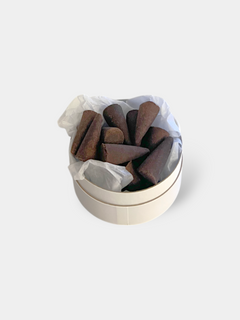
Our incense cones offer a more ritualised fragrance moment than a candle or diffuser. A single Wilderness or Vanilla Oud cone burns for around twenty minutes and leaves residual fragrance for hours after. Suited to the start of an evening, before guests arrive, or as a quiet weekend ritual.
Strategic use: Room sprays
Room sprays suit the living room as a pre-guest refresh. A single spritz fifteen minutes before guests arrive allows the fragrance to settle. Our Blossom, Wilderness and Botanics Room Sprays are alcohol-free, so there's no harsh sting on inhale. They aren't a substitute for continuous fragrance, but they're an effective tool for immediate impact.
Placement: Where to Put Fragrance in a Living Room
Placement is the most underestimated element of living room fragrance. The same diffuser will perform very differently depending on where it sits in the room.
Near the entrance. The most impactful placement. Fragrance placed near the door catches every person who enters the room. This is where luxury hotels place their lobby diffusers. The first impression is the most powerful.
At mid-height. Fragrance rises. A diffuser placed on a coffee table will perform less well than one placed on a sideboard or bookshelf at waist-to-chest height. Candles on a coffee table are the exception. The flame creates its own convection.
Away from direct airflow. Radiators, open windows, and fans all accelerate fragrance evaporation and reduce longevity. Place diffusers away from direct heat and airflow sources.
Not in corners. Corners trap fragrance rather than distributing it. Place fragrance sources on surfaces that allow air to circulate around them.
Seasonal Living Room Fragrance
The living room is the room where seasonal fragrance rotation has the most impact. A home that smells different in January than it does in July feels considered and alive in a way that a single year-round fragrance cannot achieve.
Spring. Fresh florals, green notes, light citrus. Our Blossom blend suits spring particularly well, with its honeysuckle, freesia and jasmine top notes.
Summer. Clean and airy compositions. Our Botanics blend, with lemon and lighter wood notes, holds up well through summer.
Autumn. Warm and spiced. Our Vanilla Oud and Wilderness blends move into their season here. Tonka, Bulgarian rose, oud and amber on cooler evenings.
Winter. Rich and enveloping. Arabian Tonka Oud is at its best in winter. Sandalwood, lily, oud and amber for the long evenings.
Open-Plan Living: Fragrancing a Kitchen-Diner-Lounge
Open-plan spaces present a specific challenge. The kitchen produces its own powerful ambient smells, and a fragrance that works in the lounge area may be overwhelmed or clash with cooking. The solution is zoning rather than a single fragrance source.
Place a diffuser in the lounge zone, positioned to draw fragrance away from the kitchen. Use a fragrance family that complements rather than competes with food smells. Warm woods, soft florals, and light orientals all work. Avoid fragrance families that are themselves food-adjacent (gourmand, spiced baking notes) in open-plan spaces, as the layering with actual cooking smells becomes unpredictable.
The LK Verdant Living Room Edit
A curated selection of our blends chosen specifically for living room performance, in the formats and fragrance families that suit the scale, social function, and seasonal range of the room.
Shop Home Fragrance
Related guides and edits:
The Romantic Edit for evening atmosphere and entertaining →
The Calming Edit for the wind-down hours →
FAQ
What is the best home fragrance for a living room?
How many reed diffusers do I need for a living room?
What size candle do I need for a living room?
How do I make my living room smell nice all the time?
What fragrance is best for an open-plan living room?