
Rose Home Fragrance: From Room Scent to Ritual
Why Rose Is the Most Complex Floral in Perfumery
Rose has been the cornerstone of fragrance for millennia. Not because it is the easiest floral to work with, but because it is the most rewarding. A genuine rose absolute contains over 300 identified fragrance compounds. This is why a well-made rose composition never smells like one thing. It smells like the memory of a rose garden: warm, slightly honeyed, layered, and alive. At lower concentrations it is light and fresh. At higher concentrations it becomes rich, deep, and almost animalic.
The finest rose in perfumery is Bulgarian rose absolute, extracted from Rosa damascena grown in the Rose Valley of Bulgaria. Turkish rose and May rose from Grasse are equally prized. What distinguishes quality rose from the cheap synthetic versions that make most people cautious of the note is exactly that complexity: the sense that the scent is doing several things at once.
In home fragrance, rose works best when treated with restraint. The goal is atmosphere, not bouquet.
Where Rose Works Best
The bedroom is the most natural room for rose. Its long association with sleep aromatherapy, its neurological connection to calm, and its warmth at close range make it the most appropriate bedroom floral for most tastes. In a reed diffuser or scented oil it creates intimacy without demanding attention. It suits guest bedrooms because it reads as universally welcoming rather than idiosyncratic.
In a bathroom, rose is a classic. Fresh and floral, it refreshes the air without competing with anything. A rose room spray after bathing turns a functional routine into something more considered.
In a living room, rose needs support to project properly. Without a warm base, oud, sandalwood or amber, it can feel delicate to the point of disappearing. With that foundation, it becomes genuinely present and evening-appropriate.
In a hallway, a rose and oud diffuser creates an immediate impression of warmth and luxury. The floral softens the resin, the resin anchors the floral, and the result is something that is difficult to walk into without noticing.
Velvet Rose and Oud
The pairing of velvet rose and oud is one of the most requested combinations in luxury home fragrance, and one of the most enduring in perfumery history. Rose softens oud's edges without stripping its depth. Oud gives rose the darker, more complex foundation that lifts it out of the purely pretty and into something richer. The combination is romantic without being sweet, and genuinely complex without being difficult to live with. It works across rooms and seasons.
Our oud guide goes into more detail on why this pairing works and how to use it throughout your home.
Rose as an Alcohol-Free Perfume Oil
Rose performs exceptionally well in alcohol-free perfume oil and reed diffuser formats. Without an alcohol carrier, the floral heart of the composition comes through cleanly, without the sharp opening that spray formats sometimes create. A rose-based alcohol-free perfume oil in a reed diffuser delivers the warmth and complexity of the material over hours rather than minutes: exactly the sustained, room-filling presence that rose is best suited to provide.
Choosing the Right Format
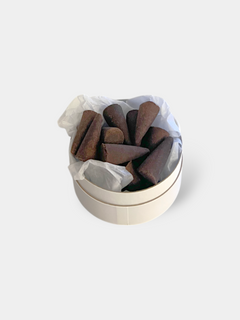
Rose benefits from slower delivery. Room spray at close range can tip into sweetness. A scented oil or wax melt releases rose more gradually, which is where the full complexity of the material reveals itself. Our Language of Blossom range carries rose as part of its floral composition alongside honeysuckle, freesia, jasmine and amber: available as incense cones, room spray and scented oil. The incense cones are for the ritual moment. The room spray is for instant atmosphere. The scented oil is for continuous, quiet presence.
The LK Verdant Rose Blends
Rose appears in three distinct expressions across the collection. In Language of Blossom as a floral ensemble with honeysuckle, freesia, jasmine and amber: light, layered, and accessible. In Wilderness as wild rose and peony alongside oud and agarwood: romantic and grounding. In the Vanilla Oud Incense Cones as Bulgarian rose at the warm oriental heart: the deepest and most complex version. Three different expressions of the same material, each suited to a different register.
Shop Language of Blossom | Shop Language of Wilderness | Browse the full collection
Rose: Frequently Asked Questions
What does rose smell like in home fragrance?
A well-made rose home fragrance smells warm, slightly honeyed, and floral without being soapy or candy-sweet. It is layered and alive, not flat. The character changes depending on what it is paired with: with oud it becomes rich and deep, with amber it becomes romantic, with musk it becomes intimate and skin-close.
Is rose a good bedroom fragrance?
One of the best. Rose has a long history in sleep aromatherapy, and at low concentrations, as in a reed diffuser or scented oil, it creates warmth and calm without being stimulating. Velvet rose and oud in a bedroom diffuser is one of the most consistently recommended pairings in home fragrance.
Does rose work in every room?
Rose works in most rooms, but it needs different support depending on the space. In bedrooms and bathrooms it can stand alone or with light musk. In living rooms and hallways, it benefits from a warm base note: oud, sandalwood, or amber, to give it the projection it needs to fill a larger space.
What is the difference between Bulgarian rose and other rose extracts?
Bulgarian rose absolute, from Rosa damascena in the Rose Valley, is considered the gold standard. It is richer, more complex, and longer-lasting than Turkish or other rose extracts, with a honeyed depth that synthetic versions rarely match. It is also considerably more expensive, which is why you find it in serious compositions rather than mass-market products.
Related guides: Bedroom guide | Oud & agarwood guide | Jasmine guide | Romantic edit | Calming edit | Sleep & Bedtime edit