
Bedroom Fragrance Guide
The Bedroom Fragrance Guide
The bedroom is the most personal room you'll ever choose a fragrance for. It's where the body unwinds, where memory and intimacy live, and the only room in the home where you spend most of your time. Choosing the right fragrance will sit with your nervous system for a third of your life. Get it wrong and you fight your own home for sleep every night without realising what you're fighting. Get it right and you sleep better, wake softer, and walk into the room every evening with a small atmospheric pleasure that compounds across the years.
This is the LK Verdant guide to scenting your bedroom well. The science of why fragrance affects sleep and mood, the fragrance families that suit a bedroom (and what to avoid), the formats to use, and the principles that separate a luxury bedroom scent from a perfumed one.
Why Bedroom Fragrance Is Different from Every Other Room
Most fragrance advice treats every room as a backdrop for scent. The bedroom isn't a backdrop. It's the only room where your mind and body are trying to power down. To lower cortisol, slow heart rate, and transition from sympathetic to parasympathetic activation. Whatever scent occupies the room is participating in that transition, for better or for worse.
This is why a candle that performs beautifully in a living room will feel oppressive in a bedroom, and why hotel fragrances seem to scent bedrooms more elegantly. The bedroom rewards three principles that most homes don't apply.
Lower fragrance concentration than you'd use elsewhere. A bedroom needs to be suggested by fragrance, not consumed by it. Concentrations that work in a kitchen or hallway will feel intrusive in a sleeping space.
Sedative or neutral notes, not stimulant ones. Citrus, peppermint and other wake-up notes activate the same brain regions you're trying to relax. Save them for the kitchen or bathroom.
Continuous low-throw fragrance. A diffuser releasing fragrance continuously at low concentration suits the bedroom rhythm. The body relaxes into a steady scent. It doesn't relax into a fragrance event.
These three principles are the foundation of every recommendation in this guide.
The Science of Bedroom Fragrance
The relationship between scent and sleep is neurological, not folklore. The olfactory bulb is the only sensory pathway in the human brain that bypasses the thalamus entirely and connects directly to the limbic system. Specifically the amygdala (emotional processing) and the hippocampus (memory). Every other sense is filtered before reaching emotion. Scent isn't.
This is why fragrance produces sleep effects that taste, sight and sound can't replicate. A 2017 review published in Sleep Medicine Reviews analysed twenty-eight studies on aromatherapy and sleep quality and concluded that olfactory exposure to specific fragrance compounds, most consistently lavender, measurably improved sleep latency, sleep efficiency and self-reported sleep quality across multiple populations.
What's actually happening neurologically
When you inhale a fragrance compound such as linalool (the active in lavender), the molecule binds to olfactory receptors in the nasal epithelium. The signal travels through the olfactory bulb directly into the limbic system, where it modulates GABA receptor activity. The same neurotransmitter pathway targeted by sleep medication, just more gently. Cortisol levels measurably decrease. Heart rate variability improves. The brain transitions toward parasympathetic dominance.
This is why a fragrance that smells nice and a fragrance that helps you sleep aren't the same thing. The first is aesthetic. The second is closer to gentle pharmacology.
The compounds that do this measurably
Five fragrance compounds have the strongest peer-reviewed evidence for sleep benefit:
- Linalool (found in lavender, bergamot, rosewood). Sedative and anxiolytic, the most studied compound in this category.
- Cedrol (found in cedarwood). Increases parasympathetic activity, slows heart rate.
- Eugenol (found in clove, holy basil). Mildly sedative, present at low concentration in many oriental compositions.
- Jasmine sambac extracts. Reduce GABA receptor agonism in a manner pharmacologically similar to gentle relaxants.
- Sandalwood (santalol). Clinically observed to reduce wakefulness and increase calm without inducing drowsiness.
If a bedroom fragrance contains one or more of these compounds at genuine concentration, the effect on a night's sleep is real and measurable.
The Fragrance Families That Belong in a Bedroom
1. Soft florals: rose, jasmine, neroli, ylang-ylang, honeysuckle
The classical bedroom fragrance family. Rose absolute is one of the most calming fragrance materials in perfumery, and jasmine sambac has clinically documented sleep effects. The risk with florals is over-sweetening. A bedroom shouldn't smell like a flower shop. Look for compositions where florals are softened with musk, light woods or a touch of vanilla. Our Blossom blend, layering honeysuckle, freesia, jasmine and amber, sits at this lighter end of the floral spectrum and works particularly well in bedrooms when applied through scented oil or room spray.
2. Warm woods: sandalwood, cedarwood, light oud
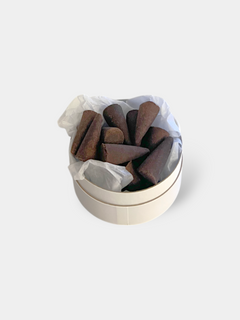
Wood-based fragrances are the most underrated bedroom category in mainstream home fragrance. Sandalwood and cedarwood are sedative at the neurological level, and lighter oud compositions (used at lower concentration than the assertive ouds you'd put in a hallway) bring depth and richness without aggression. Our Wilderness blend, with its softer floral oriental of wild rose, peony and gentle oud, suits the bedroom better than our heavier Vanilla Oud or Arabian Tonka cones, which are designed for living rooms and bath-time ritual rather than overnight scenting. These notes age well in a master bedroom and read more sophisticated than pure florals once a wearer is over thirty.
3. Calming herbals: lavender, chamomile, clary sage
The pharmacologically active category. Lavender is the most-studied sleep fragrance in the world for good reason. Linalool's GABAergic activity is genuinely sedative, and the published evidence is consistent across populations. The risk with lavender is that mass-market formulations have made it feel cheap. Look for true French lavender essential oil (lavandula angustifolia) over synthetic lavender fragrance. The difference in elegance is substantial. We don't currently offer a lavender-led blend, but if you're choosing for sleep specifically it's the most evidence-backed single note available.
4. Powdery musks and skin scents
Soft musk, white tea, iris, fresh linen. The fragrance family that smells like a luxury hotel bedroom because that's what most luxury hotels actually use. These are the most neutral bedroom fragrances. They don't compete with intimacy, they don't read as decorative, and they layer beautifully with whatever perfume you wear yourself.
5. Light orientals: light amber, soft vanilla, warm spice
The romantic bedroom category. Amber, soft vanilla and warm spice notes (cinnamon, cardamom, used lightly) suit bedrooms intended for couples or for evening atmospheres. The crucial word here is light. Heavy oriental compositions belong in living rooms and dining spaces, not bedrooms. A bedroom-appropriate oriental should suggest warmth, not announce it. The lighter notes in our Vanilla Oud cones (tonka, vanilla, soft musk) sit in this register, though we'd recommend burning them during bath time rather than as overnight fragrance.
What Doesn't Belong in a Bedroom
Citrus and bright green notes
Lemon, grapefruit, mint, eucalyptus, basil. These are alertness-promoting compounds. They activate the same brain pathways as morning sunlight. Wonderful in a kitchen or bathroom. Wrong in a bedroom. Our Botanics blend, with its lemon top notes, is designed for kitchens and home offices rather than bedrooms.
Heavy gourmand notes
Caramel, chocolate, sugar, dense praline accords. These read as dessert at scale and quickly become cloying in a sleeping space. A small touch of vanilla as a base note is fine. A gourmand-led fragrance is not.
Aggressive smoke and tar accords
Birch tar, intense smoky leather, heavy frankincense smoke, strong ouds. Beautiful in a study or living space. Combative in a bedroom. Our Arabian Tonka Oud cones are an example of a composition we love but would not recommend for bedroom use as overnight fragrance.
Sharp aldehydes and ozonics
The fresh laundry and ocean spray synthetic accords. They're stimulating rather than relaxing, and they feel artificial at the closer breathing distance of a bedroom.
Which Format to Use in a Bedroom
The format you choose matters as much as the fragrance itself. Bedrooms reward continuous, low-throw formats and punish event-based, high-throw ones. The ranking below reflects bedroom suitability specifically, not general performance.
Best: Reed diffusers and scented oils
The bedroom format. Continuous, low-concentration release, no flame, no attention required, lasts months at average diffusion. Place at waist height on a bedside table or sideboard, away from windows and radiators (heat depletes diffuser oils fast), and turn the reeds once a week to refresh throw. A diffuser in a bedroom should be just-perceptible when you walk in. If it's strong on entry, the throw is too high. Reduce reeds. Our Wilderness Scented Oil and Blossom Scented Oil both suit bedroom use particularly well.
Excellent: Wax melts
The flame-free alternative for those who want more control. A single melt cube on a wax warmer releases fragrance for approximately eight hours, suits the bedroom's slower rhythm, and lets you switch off for the night by simply unplugging the warmer. Better than a candle for any bedroom where someone may fall asleep with it lit, which is to say almost every bedroom.
Good, with conditions: Candles
Candles work in a bedroom only as bath-time or pre-sleep ritual fragrance. Light for thirty minutes to an hour, then extinguish before sleep. Never sleep with a candle lit. If you want fragrance throughout the night, use a different format. Candles for the bedroom should be single-wick (more controlled throw than double or triple wick) and burned for the bath-and-book hour rather than as continuous ambient scent.
Use sparingly: Room sprays
Sprays produce a high-concentration burst that fades fast. The wrong rhythm for a sleeping space, and the high concentration on inhale can trigger headaches. Where they work is the moment you change the bedsheets. A single light spritz of a fabric-safe linen mist over the bed, then leave the room for ten minutes before returning. Don't spray the air immediately before bed. The concentration is too high and the impression too announced. Our Blossom Room Spray is alcohol-free, which prevents the harsh inhale of mass-market sprays.
Specialist: Pillow mists
Made for the bedroom specifically, formulated at lower concentration than room sprays and intended for direct application to bedlinen. Worth using if you struggle with sleep onset, particularly lavender-led pillow mists, which have the strongest evidence base of any bedroom fragrance application.
Master Bedroom vs Guest Room vs Nursery
Not every bedroom should be scented the same way. Three meaningful distinctions.
The master bedroom
Choose the fragrance you most want to live with. This is the room that most rewards a signature scent. The master bedroom is where you build fragrance memory over years. Treat it as the room where you invest most in fragrance quality and let lesser bedrooms borrow the spillover. Sandalwood, soft oud, rose-and-musk and warm vanilla compositions all suit a master bedroom indefinitely. Avoid switching the fragrance seasonally. The master bedroom benefits from continuity. Our Wilderness Scented Oil is the closest LK Verdant fit for this purpose.
The guest bedroom
Different rules entirely. A guest bedroom wants a neutral fragrance, something pleasant, hotel-like and unspecific, because you don't know what your guests will personally enjoy. Soft linen, white tea, light fig, neroli or a clean musk all work. Avoid statement fragrances in guest rooms. The brief is subtle and welcoming, not this is the bedroom of someone with a particular taste.
The nursery and children's bedrooms
Light, soft, low-concentration only. And ideally fragrance-free for infants under twelve months, where the developing olfactory system is best left alone. For older children's bedrooms, mild lavender, soft chamomile or a barely-there clean cotton scent is appropriate. Always choose flame-free formats for children's spaces. Wax melts only when adult-supervised. Diffusers placed out of reach.
How to Make Your Bedroom Smell Like a Luxury Hotel
Luxury hotels scent their bedrooms differently than most homes do. The principles aren't secret, but they're rarely written down. Three things they do consistently that you can replicate.
1. They commit to a single fragrance
A luxury hotel bedroom uses one fragrance composition across every fragrance touchpoint in the room. The diffuser, the linen mist, the bath products, sometimes even the housekeeping sprays. The repetition is what creates the immersive impression. Most homes use unrelated fragrances in the same bedroom and wonder why the effect feels chaotic. The fix. Choose one LK Verdant fragrance composition and apply it across two or three formats. A scented oil as the base note of the room, a wax melt for evening warmth, a room spray for the linen.
2. They use higher concentration than retail home fragrance
Hotel diffusers often run at 12–20% fragrance load, where retail diffusers typically run at 4–8%. This is why a hotel room smells fragranced the moment you open the door, and most homes don't. You can't replicate exact hotel concentration with retail formats, but you can get closer by using two diffusers in a larger bedroom rather than one, or by pairing a diffuser with a continuously running wax warmer.
3. They place fragrance at points of arrival, not the centre of the room
A diffuser by the bedroom door catches you on every entry. A diffuser in the centre of the room you walk past without noticing. The point-of-arrival placement is what creates the the room smells incredible the moment I walk in sensation that defines luxury hotel atmosphere.
Common Bedroom Fragrance Mistakes
Treating the bedroom like every other room. Different room, different rules. Stop using the same fragrance you use in your hallway. The bedroom asks for less, not more.
Buying based on the candle in the shop. The shop's lighting, ventilation and emotional context have nothing to do with your bedroom's. A candle that's beautiful in a Sephora aisle may be wrong in your bedroom. Wherever possible, sample first.
Sleeping with a candle lit. Never. There are no exceptions. Use a wax melt or scented oil for overnight fragrance.
Layering unrelated fragrances. A vanilla candle and a citrus diffuser will not blend. They will compete. Use one fragrance per room, ideally one fragrance composition across multiple formats in the same room.
Using kitchen-strength fragrances in the bedroom. Strong cooking-resistant fragrances are wrong for sleeping spaces. The fragrance that cuts through curry steam will not lull you to sleep.
Spraying the air immediately before getting into bed. Wait at least ten minutes after spraying before going to bed. Inhaling concentrated room spray at close range disrupts sleep onset rather than encouraging it.
The LK Verdant Bedroom Edit
A curated selection of our blends specifically chosen for bedroom suitability, in the formats that suit overnight scenting and in the fragrance families covered above. Our Wilderness and Blossom Scented Oils are the LK Verdant bedroom signatures.
Shop Home Fragrance
Related guides and edits:
The Sleep & Bedtime Edit for compositions specifically chosen for sleep onset →
The Calming Edit for the wind-down hours →
The Romantic Edit for couples and intimate atmospheres →
FAQ
What is the best home fragrance for a bedroom?
What scent is best for sleep?
Is it safe to leave a reed diffuser in the bedroom overnight?
Can I sleep with a candle burning in my bedroom?
How do I make my bedroom smell like a luxury hotel?