
Home Office Fragrance Guide
The Home Office Fragrance Guide
The home office is the room where fragrance has the most direct, measurable effect on cognitive performance. Unlike the bedroom (where fragrance affects sleep) or the bathroom (where it affects mood), the home office is where fragrance affects your ability to think, concentrate and produce work. The right scent in a workspace isn't a luxury. It's a performance tool. The wrong one is a distraction.
This guide is the LK Verdant approach to home office fragrance. The neuroscience of scent and cognition, the fragrance families that genuinely enhance focus, and the formats and strategies that actually work in a workspace.
Why Fragrance Affects Cognitive Performance
The relationship between scent and cognitive function is one of the most well-documented areas of olfactory neuroscience. The olfactory bulb's direct connection to the limbic system, and specifically to the hippocampus (which governs memory and learning), means fragrance has a more direct pathway to cognitive function than any other sensory input.
A 2016 study published in the Journal of Environmental Psychology found that ambient fragrance in a workspace measurably affected task performance, error rates and self-reported concentration. Specific compounds, most consistently rosemary, peppermint and lemon, produced statistically significant improvements in cognitive performance metrics including memory recall, processing speed and sustained attention.
A 2012 study at Northumbria University found that participants in a room diffused with rosemary essential oil performed significantly better on memory tests than those in an unscented room. The active compound, 1,8-cineole, was found in measurable concentrations in participants' blood, confirming that olfactory exposure to rosemary produces genuine neurochemical effects rather than placebo response.
The home office is the room where this research has the most direct practical application.
The Three Principles of Home Office Fragrance
Choose families that activate rather than sedate. The bedroom rewards sedative fragrance families. The home office rewards the opposite. Citrus, mint, aromatic herbs. Anything that increases alertness, improves focus, supports sustained cognitive effort.
Use fragrance at moderate concentration. Fragrance that's too strong in a workspace becomes a distraction rather than a support. The home office rewards a consistent, moderate fragrance presence. Enough to be neurologically active, not so much that it competes for attention.
Treat fragrance as a focus ritual. The most effective use of home office fragrance is as a ritual cue. A specific scent that you use only when working, which trains the brain to associate that smell with a focused, productive state. This is the olfactory equivalent of a work playlist.
The Fragrance Families That Belong in a Home Office
Rosemary and aromatic herbs
The home office's most evidence-backed fragrance category. Rosemary has the strongest peer-reviewed evidence for cognitive enhancement of any fragrance compound. The 1,8-cineole in rosemary inhibits acetylcholinesterase, the enzyme that breaks down acetylcholine, which is the neurotransmitter associated with memory and learning. The result is measurable improvement in memory performance. Sage has similar properties. These aren't simply pleasant fragrances for a workspace. They're neurologically active compounds that support the cognitive work the home office is designed for. We don't currently make a rosemary-led blend, but the principle is worth knowing.
Citrus
The alertness and mood category. Citrus compositions are the most consistently effective fragrance family for improving mood and reducing fatigue in a workspace. Lemon in particular has been shown to reduce error rates in clerical tasks. A 1994 study by Hiroshi Tsuchiya found a 54% reduction in typing errors in a lemon-scented environment compared to an unscented one. Grapefruit is the most energising citrus for workspace use. Bergamot adds a floral complexity that prevents citrus reading as purely functional. Our Botanics blend, built around lemon top notes layered with patchouli, tobacco and wood, sits in this register and is the LK Verdant home office recommendation. The lemon delivers the alertness benefit, the wood and tobacco base keeps it serious enough for a video call.
Peppermint and cool mint
The focus and alertness category. Peppermint is one of the most studied fragrance compounds for cognitive performance. Research at the University of Cincinnati found peppermint fragrance increased alertness and decreased fatigue in participants performing sustained attention tasks. The menthol compounds in peppermint activate cold receptors in the nasal passages, producing a sensation of increased alertness that's both neurological and physiological. We don't currently make a peppermint blend, but for sustained concentration tasks it's the most evidence-backed single note.
Light woods and resins
The grounding and focus category. Light wood compositions like cedarwood, hinoki, light frankincense and cypress suit home offices that require sustained, deep concentration rather than high-energy output. Cedarwood and hinoki have a clean, slightly resinous quality that's grounding without being sedative. Frankincense at low concentration has documented effects on reducing anxiety and improving focus. It has been used in contemplative and scholarly environments for millennia for precisely this reason. Our Wilderness blend, with its agarwood and oud register, sits at the heavier end of this family. Suited to creative work, writing, and deep analytical tasks.
Green tea and clean botanical
The sustained focus category. Green tea compositions have a clean, slightly astringent quality that suits long working sessions. Less stimulating than citrus or mint but more activating than woods, making them ideal for the middle hours of a working day when you need sustained focus without the peak stimulation of a morning citrus.
What Doesn't Belong in a Home Office
Sedative fragrance families
Lavender, chamomile, heavy musks and soft florals are bedroom fragrances. In a home office they actively work against cognitive performance by promoting the parasympathetic activation that's appropriate for sleep but counterproductive for work. If you find yourself drowsy at your desk, check whether your workspace fragrance is contributing. Our Vanilla Oud and Arabian Tonka cones, much as we love them, are not workspace fragrances.
Heavy orientals and dense compositions
Rich, complex oriental compositions are too demanding for a workspace. They compete for cognitive attention rather than supporting it. The home office rewards clean, clear fragrance families that support rather than distract.
Gourmand notes
Food-adjacent fragrances in a workspace create hunger associations counterproductive to sustained concentration. Caramel, chocolate, vanilla-led compositions belong in living rooms and bedrooms, not in a space designed for cognitive output.
Which Format to Use in a Home Office
Best: Scented oils and reed diffusers
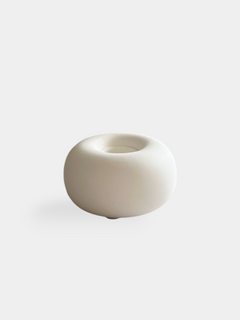
A scented oil or small reed diffuser is the ideal home office fragrance format. It provides continuous, consistent fragrance at moderate concentration that suits sustained work sessions. Place on a shelf or surface away from your primary work area. Close enough to be neurologically active, not so close it becomes intrusive. Our Botanics Scented Oil is formulated for exactly this use.
Excellent: Electric ultrasonic diffusers with timer
An electric diffuser with an intermittent timer is the most sophisticated home office fragrance tool. Set to diffuse for thirty minutes on, thirty minutes off, it provides neurological stimulation without olfactory fatigue. The olfactory system adapts to continuous fragrance exposure (a phenomenon called olfactory adaptation), so intermittent diffusion maintains cognitive benefits more effectively than continuous exposure.
Excellent: Hand-pressed incense cones
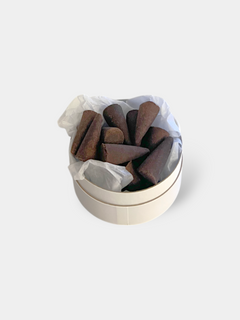
Our Botanics Incense Cones serve particularly well as a focus ritual. Light one at the start of a deep work session, allow it to burn for the first twenty minutes of the work block, and let the residual fragrance hold the focus state for hours afterwards. The act of lighting the cone becomes part of the ritual cue.
Strategic use: Room sprays
A room spray in the home office is most effective as a focus reset. A single spritz of our Botanics Room Spray when concentration is flagging provides an immediate neurological stimulus. Keep one at your desk for use during afternoon energy dips.
The Focus Ritual: Using Fragrance as a Cognitive Cue
The most sophisticated home office fragrance strategy is to use a specific scent as a ritual cue for focused work. The principle is simple. Choose a fragrance that you use exclusively in your home office, and use it consistently at the start of every work session. Over time the brain associates that fragrance with a focused, productive state, and the act of diffusing it becomes a trigger for that state.
This is the olfactory equivalent of a work playlist or a specific coffee ritual. The fragrance itself provides neurological benefit. The ritual association amplifies it. Choose a fragrance from the activating categories above and commit to it as your workspace signature.
Placement in the Home Office
Not directly on your desk. Fragrance placed directly on your work surface can become intrusive and distracting. Position your diffuser on a shelf or secondary surface within the room.
At mid-height. Fragrance rises. A diffuser at desk height or above will distribute more effectively than one on the floor or a low surface.
Away from screens and electronics. Reed diffuser oils can damage electronic equipment if spilled. Keep diffusers away from computers, monitors and keyboards.
Near a window for natural airflow. A position near a window allows fragrance to circulate naturally. Avoid direct sunlight, which degrades diffuser oils.
Working from Home with Children or Housemates
Shared home offices and rooms used for both work and family life present a specific challenge. The room can't smell like one thing during work hours and another thing in the evening if it's the same physical space. The solution is to use intermittent rather than continuous fragrance. A scented oil that's only opened during work hours, an incense cone burned at the start of a focused session, or a room spray applied only during work blocks. The fragrance becomes associated with work mode and the absence of fragrance with family time.
The LK Verdant Home Office Edit
A curated selection of our blends chosen specifically for workspace performance, in the fragrance families that support focus, concentration and cognitive output.
Shop Home Fragrance
Related guides and edits:
The Focus & Concentration Edit for sustained work →
The Energising Morning Edit for early-day energy →
FAQ
What is the best fragrance for a home office?
Does fragrance really help with focus and productivity?
What fragrance helps with concentration?
Should I use a candle or diffuser in my home office?
How do I use fragrance as a focus ritual?